



Many readers of AboutBruceLee.com are likely to have initially been attracted to Bruce Lee as a result of his cinematic physical prowess. The more that you learn about Bruce and his way of life, though, the more his deep philosophical insights become apparent, and these continue to resonate with us today. Lee’s approach to life, identity, and the discipline of martial arts has influenced not just the world of fighting but has also made significant contributions to modern philosophy and thought.
The Interconnection of Mind and Body
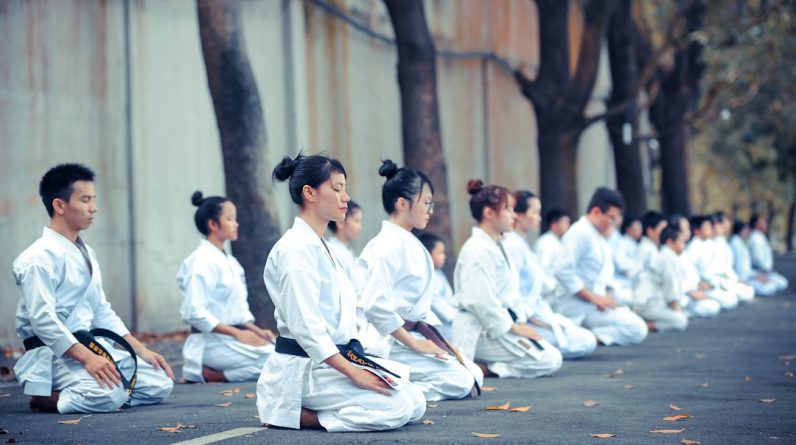
One of Lee’s fundamental beliefs was the harmony between mind and body. He asserted that to truly master martial arts – or any skill, for that matter – one must cultivate both physical ability and mental clarity. This isn’t just about hitting targets in training; it’s a holistic approach that applies to life itself. If you can think clearly, you’ll move decisively. This philosophy parallels modern psychological practices that emphasize the mind-body connection to improve well-being.
Practical Application: Mindfulness in Martial Arts
Practicing mindfulness – a concept rooted in various philosophies and a growing trend today – echoes Lee’s teachings. When you’re sparring or training, if you focus solely on movement without letting thoughts cloud your mind, you can react better. For instance, consider a martial artist engaged in a competition. If they’re consumed by fear of losing or anxiety over the opponent, their performance can suffer. But if they channel Bruce Lee’s philosophy, commanding their movements through awareness, they’re more likely to succeed. This collective consciousness not only applies to martial arts but can be adopted in daily life to enhance your reactions in stressful situations.
Embracing Change and Adaptability
Another element of Bruce Lee’s philosophy was his belief in adaptability. He famously said, “Be like water, my friend.” Water is fluid; it changes form based on its environment. This concept applies to both martial arts and life. Lee exemplified this idea through his unique martial arts style – Jeet Kune Do – which encourages practitioners to adapt techniques that work for them instead of adhering to a fixed system.
Real-World Comparisons: Adapting in Business
This adaptability can serve as a powerful metaphor in business contexts as well. Consider a start-up that faces unexpected market changes. If they cling to outdated strategies instead of adapting, they risk failure. In contrast, a company that mirrors Lee’s philosophy, flexibly shifting its focus or products in response to consumer demands, is more likely to survive and thrive. Lee’s principles are not just martial arts ideas; they’re frameworks for approaching life’s challenges.
Individuality and Authenticity
Lee’s emphasis on the importance of individuality is a powerful statement in a world that often pressures conformity. He believed that true mastery comes from understanding oneself and adapting techniques that resonate personally. This notion can be liberating; it allows for self-expression and encourages people to carve their unique paths, just as Lee did by creating Jeet Kune Do.
Personal Stories: Finding Your Unique Path
Take a moment to think about your life. When have you felt pressured to fit into a mold? Maybe you were told to follow a specific career path or adopt a particular style. Now, think about how liberating it can be to embrace your individuality. Lee’s journey of creating his martial art was about authenticity; he founded a practice that aligned with his principles and beliefs. You can do the same. Reflect on your strengths and experiences, and let them define who you are, whether in work, relationships, or training.
The Role of Discipline and Commitment
Discipline was at the core of Lee’s philosophy. Mastery in martial arts – and indeed, in life – requires consistent effort, focus, and dedication. Lee trained with an intensity that is often regarded as legendary. He understood that while talent gives you a head start, hard work and discipline will ultimately get you where you want to go.
Applying Discipline to Personal Growth
In your daily life, think about how you can incorporate Lee’s commitment to discipline. Set aside time for your passions. Create a structured training routine that focuses on your individual goals. Use tools like journals or apps to track your progress. The discipline you apply in martial arts can seamlessly transition into other areas of your life, helping you grow and achieve your aims.
Philosophy of Self-Improvement
Lee viewed life as an endless journey of self-improvement. His famous quote, “A goal is not always meant to be reached; it often serves simply as something to aim at,” speaks volumes. Goals give direction but should not become rigid targets that crush your spirit. Instead, regard them as stepping stones in your journey.
The Importance of Reflective Growth
To embody this philosophy, engage in reflective practices. At the end of each week, take time to assess what you’ve learned and how you’ve changed. This habit promotes growth and helps you appreciate the process, not just the end results. Lee’s philosophy encourages continuous personal evolution – remember, successful people are those who keep learning, adapting, and growing.
The Lasting Impact of Bruce Lee’s Philosophies
Bruce Lee’s philosophical insights go beyond martial arts and cinema; they shape modern thought and inspire countless individuals. By embracing the interconnectedness of mind and body, adaptability, individuality, discipline, and the relentless pursuit of self-improvement, you can refine your understanding of life and personal growth. As Lee once said, “Knowing is not enough; we must apply. Willing is not enough; we must do.” You hold the key to applying these principles, creating a life that honors his legacy while paving your own path.